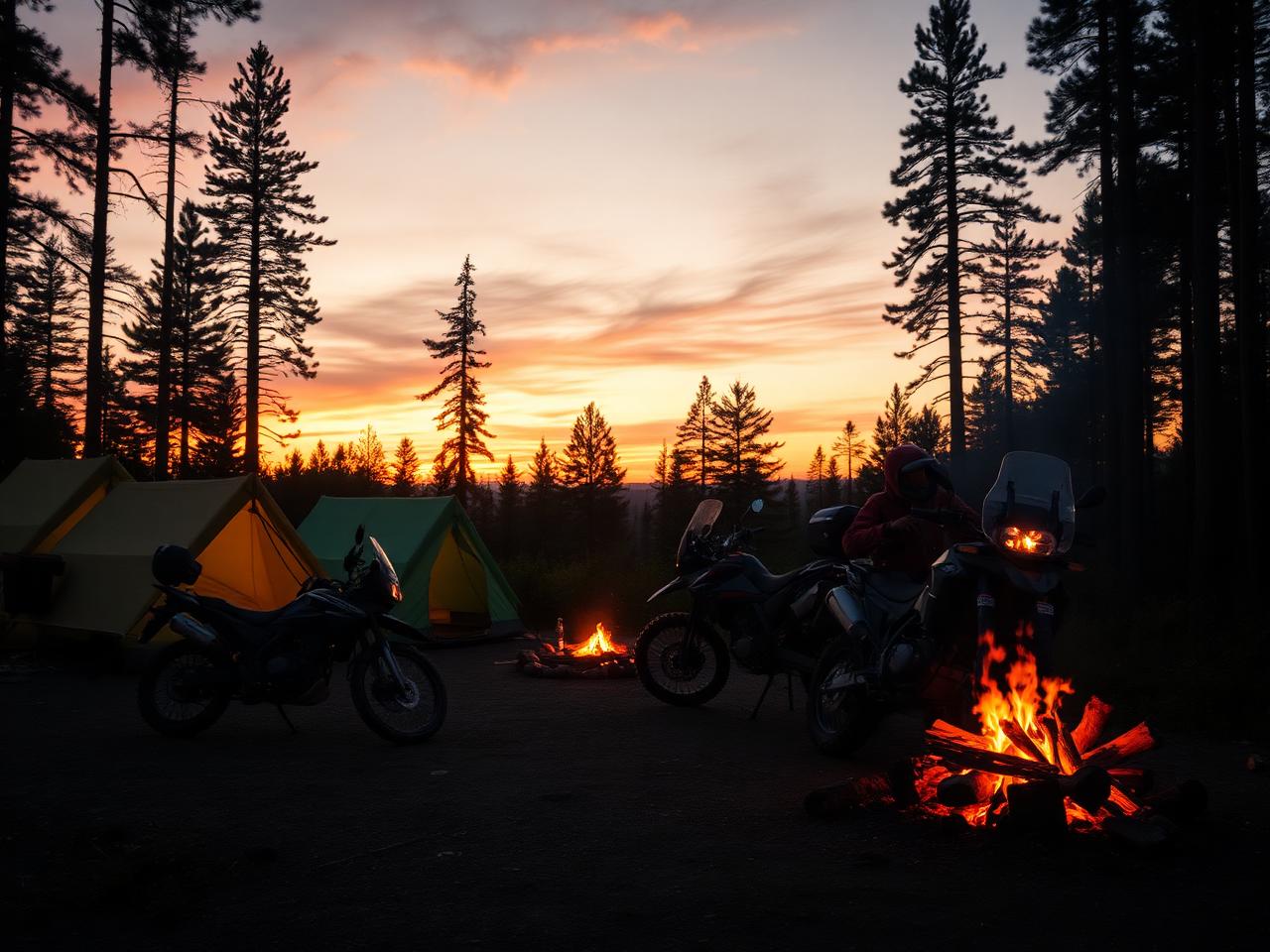
Motorcycle camping is the cheapest way we know to make a weekend feel like a week off. You ride further than a day trip, sleep outside, eat something you cooked on a rock, and roll home a different person. The gear list looks intimidating from the outside — it isn't. Most of what matters is knowing what to leave home.
This guide is for riders who have never camped from a bike before. If you've got a license, a working motorcycle, and one free weekend, you have enough to start. We'll cover the honest expectations, the gear that actually earns its weight, how to pack it, where to sleep, and what to do when the weather lies to you.
Is moto camping right for you?
Be honest about three things before you spend a dollar on gear:
- Time. A real first trip is two nights minimum. One night out feels like errands; two nights is when your brain actually slows down.
- Fitness. You don't need to be an athlete, but wrestling a loaded bike on gravel at the end of a 250-mile day is different from a Sunday loop. Train by riding longer, not by lifting.
- Money. You can start for around $400 in gear if you buy smart and used. You can also spend $4,000. The cheap setup works.
Choosing your bike & luggage setup
The best motorcycle camping bike is the one in your garage. Adventure bikes (KTM 890, Tenere 700, GS) are purpose-built and forgiving on dirt, but plenty of people tour on standards, cruisers, even sport bikes. The bike sets the route — not whether you can go.
Soft luggage vs hard cases
- Soft bags (Mosko, Giant Loop, Kriega) — lighter, less expensive, more forgiving in a tip-over. Best for dirt-heavy trips.
- Hard cases — lockable, weatherproof, predictable shape. Best for pavement-heavy trips and overnight stops in towns.
- A tail bag plus a small tank bag is enough for a first trip. Don't buy panniers until you've camped twice without them.
Whatever you choose, respect the bike's load rating. Most middleweights handle 40–50 lb of gear cleanly. Past that, suspension and brakes start to argue with you.
The essential gear list
Pack from these five buckets. If something doesn't belong in one of them, it probably doesn't belong on the bike.
Shelter & sleep
- 1- or 2-person tent (free-standing)
- Sleeping bag rated 10°F below forecast low
- Inflatable sleeping pad (R-value 3+)
- Compressible pillow or stuff sack
- Small footprint or piece of Tyvek
Cooking & water
- Canister stove (MSR Pocket Rocket, BRS-3000T)
- One pot, one cup, one spork
- 2L water capacity (bottles or bladder)
- Squeeze filter (Sawyer) or tablets
- Lighter + backup lighter
Tools & repair
- Tire plug kit you've practiced with
- 12V pump or CO2 cartridges
- Multitool + bike-specific wrenches
- Zip ties, duct tape, baling wire
- Spare clutch & brake levers (optional)
Safety & navigation
- Compact first aid kit (with tourniquet)
- Headlamp + spare batteries
- Phone mount + offline maps downloaded
- Paper map or printed route as backup
- Emergency contact card in your jacket
Clothing layers
- Merino or synthetic base layer
- Insulating mid layer (fleece or puffy)
- Real rain gear — not a $20 poncho
- Camp clothes (sweats, second pair of socks)
- Beanie — camp gets cold fast after dark
The little stuff
- Headnet if you're going where bugs live
- Bear bag or Ursack in bear country
- Trash bag (pack it out)
- Cash for campgrounds without card readers
- Earplugs — wind all day kills sleep
Packing the bike
Weight low, weight forward, weight centered — in that order. Heavy items (tools, water, fuel canisters) ride in tank bag or low in panniers. Lightweight bulky items (sleeping bag, clothes) go up high in the tail bag. Anything you need at gas stops lives in the tank bag so you don't unpack the bike five times a day.
- Strap to the frame and subframe — never to plastic fairings.
- Two attachment points per bag, minimum. Backup strap on everything.
- Dry-bag liners inside soft luggage. "Water-resistant" means "wet by lunch."
- Test-ride loaded before you leave. Weight changes how the bike turns.
Picking your first campsite
For trip one, book an established campground. A basic restroom (often just a small outhouse-style building over a vault, sometimes called a "vault toilet"), a picnic table, and a numbered site take three problems off your plate so you can focus on the rest. State and national forest campgrounds are cheap ($15–25), quiet midweek, and almost always have a spot for a motorcycle even when "full."
Useful apps
- iOverlander — dispersed and free sites, with rider reviews.
- The Dyrt or Hipcamp — established + private land.
- Recreation.gov — national forest and BLM reservations.
- onX Offroad — public land boundaries when you go dispersed.
Once you've got a few trips under your belt, dispersed camping on national forest land is free, legal, and the actual point. But the first time, pay the $20.
A realistic first-trip itinerary
The shakedown (one night, 90 minutes from home)
Pick a campground close enough that you can bail home if you forgot something important. Set up the tent, cook one meal, sleep, ride back. You will discover three things you packed wrong. That's the whole goal.
The first real trip (two or three nights)
Plan a loop, not an out-and-back. Cap daily mileage at 200 highway or 120 mixed. Arrive at camp by 4 p.m. so you set up in daylight and have time to eat before the sun drops. Two nights at the same site beats three nights at three different sites — you'll thank yourself.
On-the-road habits that save the trip
- Fuel by the third bar. Range anxiety ruins more rides than weather. Top off when you can, not when you have to.
- Camp by 4 p.m. Setting up in the dark is miserable. Cooking in the dark is worse.
- Check weather every morning. Mountain forecasts change in three hours.
- Tire pressure cold, every morning. A pump is two ounces. A flat in the woods is a day lost.
- Tell one person your plan. Send the GPX or a screenshot before you leave service.
Common beginner mistakes
- Overpacking. If you didn't use it last trip, leave it.
- Too many miles. The trip is the camp, not the route.
- Cheap rain gear. You'll buy good rain gear eventually. Buy it first.
- Brand-new boots on day one. Break them in on day rides first.
- No water plan. Know where the next fill-up is before you need it.
When things go wrong
Flat tire
Plug it, pump it, ride slowly to the next town. Tubeless tires hold plugs for hundreds of miles. Practice with a plug kit on an old tire in your garage before you need to do it in the rain.
Storm rolls in
If it's safe, get off the bike and into a building, underpass, or campground restroom — any enclosed structure beats standing next to a motorcycle. Lightning beats schedules. If you're already at camp, stake everything out, get in the tent, wait. Most pass in under an hour.
You're lost
Stop moving. Pull the offline map, find the last junction you're sure of, route back to it. Don't try to "cut across" on unknown forest roads — that's how short days turn into night hikes.
The bike won't start
Fuel, spark, air, in that order. Check the kill switch, the sidestand, and the kickstand sensor first — most "dead bikes" at campsites are operator error. After that, call the number on your roadside coverage card.
Ready for the next step?
The best way past beginner is repetitions. Shakedown trip, then a two-nighter, then start linking weekends together. When you're ready for something bigger and you'd rather not plan it yourself, we can do that part for you — or you can ride with us at an event.